


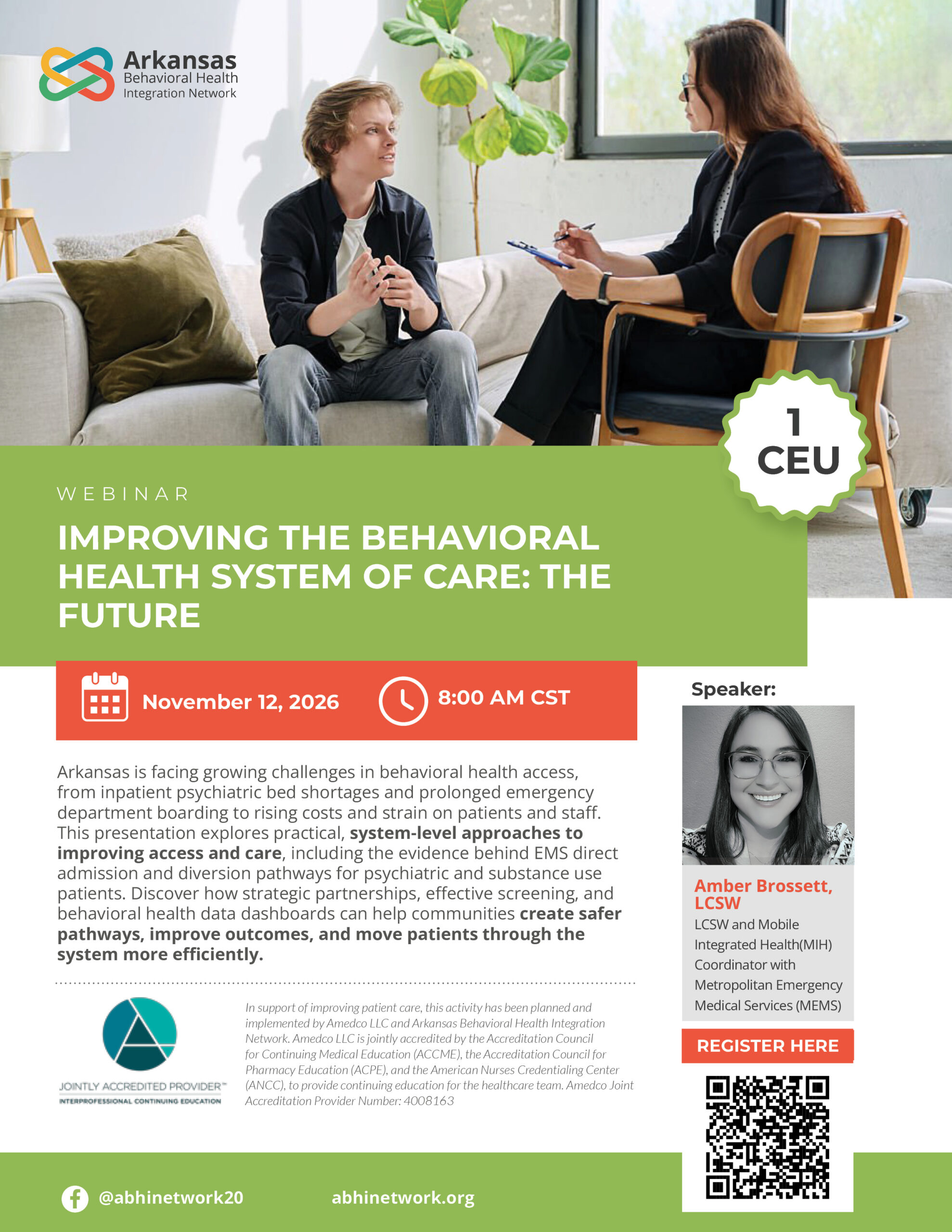
Improving the Behavioral Health System of Care: The Future
November 12 @ 8:00 am - 9:00 am
As Arkansas continues to face challenges in accessing timely behavioral healthcare, innovative approaches are needed to improve patient outcomes and strengthen the behavioral health system of care. Join us for an informative webinar exploring the impact of psychiatric inpatient bed shortages and emergency department boarding on patients, healthcare professionals, and healthcare costs. This session will examine opportunities to improve access and coordination of care, including evidence supporting EMS direct admission and diversion pathways for individuals experiencing mental health and substance use crises. Participants will also be introduced to the potential use of behavioral health dashboards to track outcomes, improve patient flow, and support more efficient coordination between emergency medical services and emergency departments. Discover how collaboration, innovative care pathways, and data-driven strategies can help shape the future of behavioral healthcare in Arkansas.
Speaker: Amber Brossett, LCSW
Amber Brossett is a Licensed Clinical Social Worker (LCSW) and Mobile Integrated Health (MIH) Coordinator with Metropolitan Emergency Medical Services (MEMS) in Little Rock, Arkansas. She is the first social worker in Arkansas EMS, recipient of the 2025 Arkansas Social Worker of the Year Award, and will begin Samford University’s Doctor of Public Health (DrPH) program this fall, where her research will focus on first responder wellness and the systems-level impact of Mobile Integrated Health and Community Paramedicine (MIH-CP). With over a decade of experience across emergency departments, case management, crisis response, and therapy, Amber brings a practical, real-world perspective to complex system challenges. She is passionate
about building sustainable, cross-sector solutions and advocating for models that treat patients with dignity while supporting the well-being of first responders. In her current role, Amber leads innovative efforts to develop and evaluate alternative response models aimed at reducing unnecessary ambulance and healthcare utilization while improving patient outcomes through early triage and meaningful resource connection. Her work bridges clinical practice, data analysis, and system design, with a strong focus on addressing social determinants of health in real time.