

Events
-
-

Maternal Mental Health: A National Landscape Review
Maternal mental health disorders affect up to one in five women during pregnancy and the postpartum period and are associated with significant consequences for mothers, infants, and families. Despite growing awareness and evidence-based screening recommendations, substantial gaps remain in screening, treatment access, workforce capacity, quality measurement, and reimbursement. This session will provide a national overview of the maternal mental health landscape, including current prevalence, clinical recommendations, quality measures, insurance coverage trends, and emerging federal and state policy initiatives. Participants will learn about barriers facing providers and patients, recent progress in expanding screening and treatment resources, and opportunities to improve outcomes through policy, payment reform, and quality improvement efforts. The session will also highlight state-level innovations and national strategies aimed at strengthening maternal mental health systems of care.
-
-

Integrated Behavioral Health: Reflections from a 10-Year Implementation
Listen to a conversation between the psychologist and physician champion who implemented Integrated Behavioral Health in a pilot study and then throughout the Kansas City Metro in a fully-capitated advanced primary care practice coupled with an insurance product. Review core concepts and the rationale of the Primary Care Behavioral Health model. Successful hiring and barriers to implementation are discussed by the professionals who led this effort together.
-
-
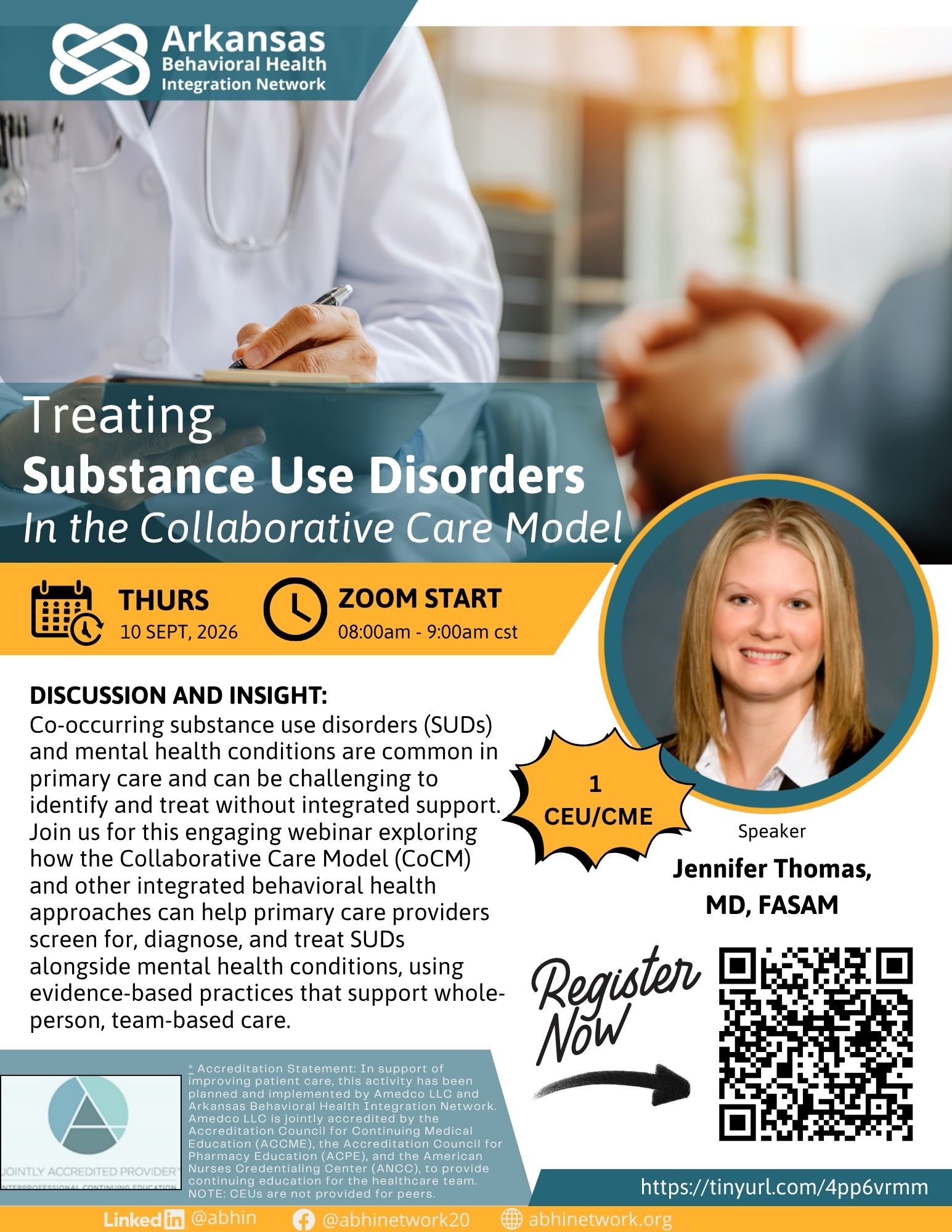
Treating Substance Use Disorders in the Collaborative Care Model
Co-occurring substance use disorders (SUDs) and mental health conditions are common in primary care and can be challenging to identify and treat without integrated support. Join us for this engaging webinar exploring how the Collaborative Care Model (CoCM) and other integrated behavioral health approaches can help primary care providers screen for, diagnose, and treat SUDs alongside mental health conditions, using evidence-based practices that support whole-person, team-based care.